The New Fashion Flex: Being Quality Literate
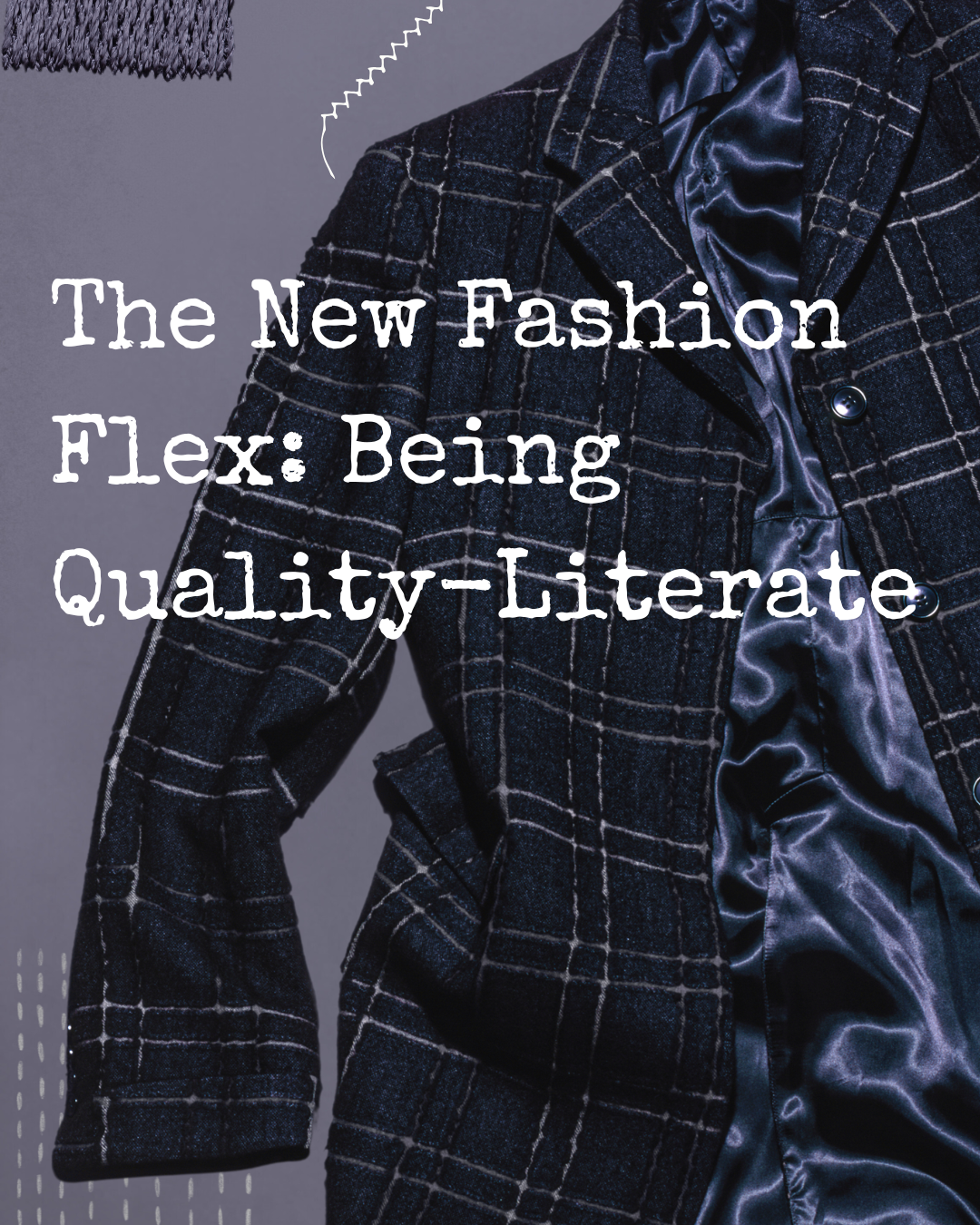
Has “high-quality” become the new clothing attribute worth flexing? You would think it ought to have already been the case, considering the obvious fact that high-quality clothes simply look better and last longer, or at least this is the aspect most luxury fashion labels have always justified their lofty price tags on.
But as Isabel Cristo astutely pointed out in her NYT piece, “today, you can buy garbage at every price point.” Singling out luxury’s comedown with that statement, as she spoke about how high-quality things have always conferred status on their owner. While conventional wisdom lets us assume that pricy products come with the promise of high standards, it no longer seems to be the case.
Isabel also helps shed light on a new wave of creators who are helping convert audiences into more discerning consumers by educating them about seams, fibre length, well-finished hems, and a lot more that would have you channelling Elle Woods the next time a brand tries to sell you low viscosity rayon with a half-loop top stitching on the hem. 💅 As Isabel said, “Quality lends one more layer of intellectualism to the project of getting dressed, just one more dialect with which to communicate your good taste.” 👀
For sustainable brands, this emerging quality-consciousness isn’t just a trend to ride, it’s the exact conversation they've been waiting for consumers to care about. 🔎
And that’s where the magic lies for most sustainable brands. Educating the customer on what high-quality looks like by building your own product playbook.
Sustainable clothing, by its very nature, is made up of several discerning choices right from seed to stitch. Rather than inundating the customer with information on what makes it sustainable and hoping something sticks, brands need to approach product education in a way that incites appreciation by their customers. Because the conscious consumer already knows what a GOTS certification means, or to question how genuine a B Corp accreditation is. As a sustainable brand, you’re hoping to tickle the unconverted and not preach to the choir. Educating, not inundating, is going to help them determine your brand’s perceived value and define its cultural currency.
P.S. When I read the NYT piece mentioned here last month, it bore the headline “Shopping Ethically Has Become a Status Symbol” and has since been truncated and reads more effectively to say “Buy Better, Buy Less, Feel Smug About It”. Weirdly, I’ve been spotting many iterations of its former headline: “Going Offline Has Become the Latest Status Symbol” or “How Sleep Optimization Has Become a Status Symbol Among the Ultra Wealthy”. Funny how being prudent and having sound judgment are being framed as luxury and virtue signalling, isn’t it?