
One of the most crucial elements of a brand strategy is answering “what do we do that can provide value to our customers?” The answer to which encompasses what makes your brand relevant and different to buyers (which you arrive at after extensive brand assessment and competitor analysis). A more common catch-all phrase for this in industry speak is “positioning”. And this article from The Cut, written by Chantal Fernandez, is a great case study in understanding positioning better.
In a world of a million athleisure brands, who is Lululemon for?
In the article, Fernandez notes, “Alo is for West Village girls and their followers. Gymshark is for lifters who drink creatine. Tracksmith is for serious runners who love vintage Ralph Lauren,” alluding to how popular athleisure and sportswear brands have managed to stake out a clear, specific territory in the consumer's mind. Lululemon, however, seems to have been left in the dust — much of it is due to its own doing — and from the looks of it, by losing its positioning clarity.
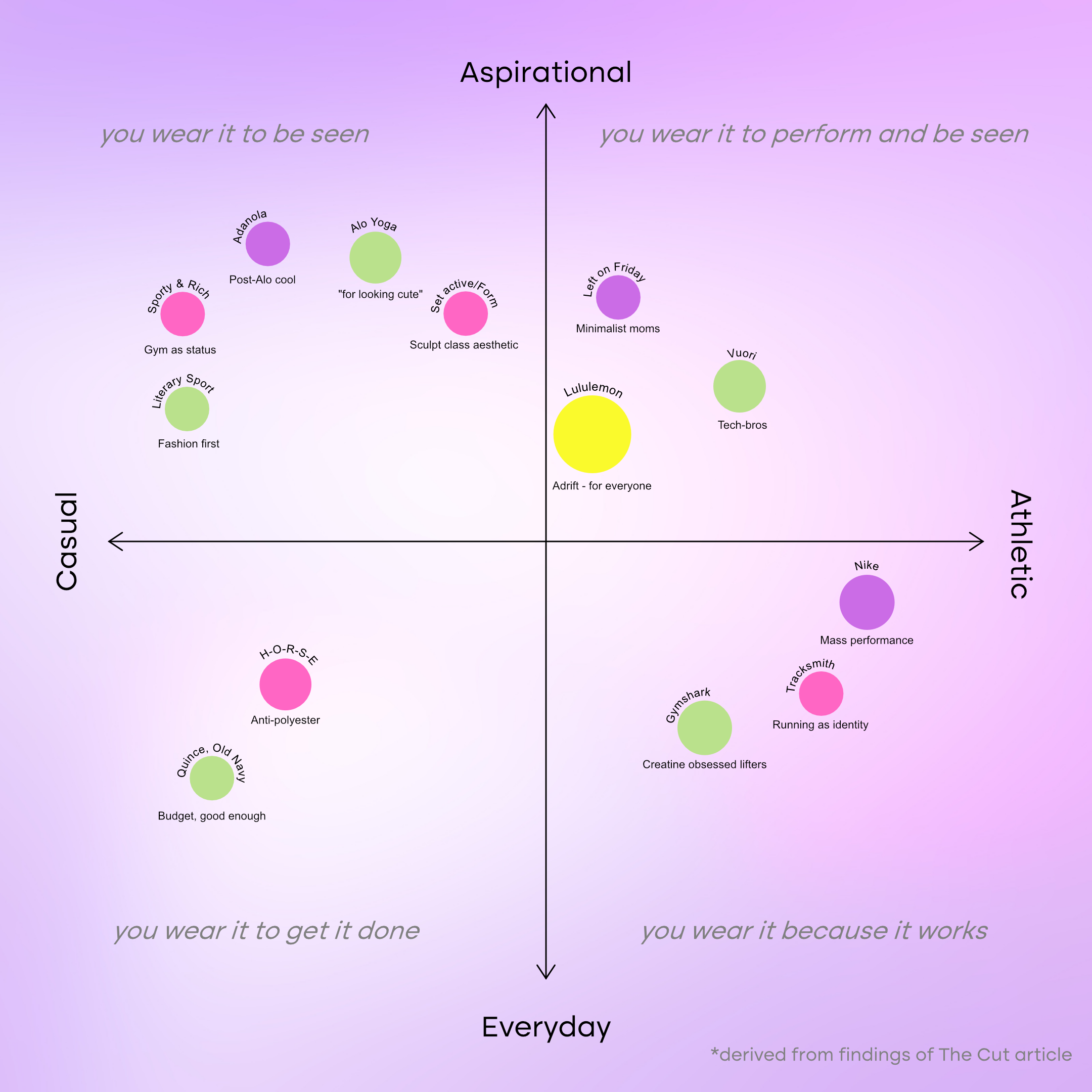
According to Chip Wilson, Lululemon’s former CEO and a consistently outspoken critic, the brand had “lost its edge” by “trying to appease everyone” and keep investors happy. He has even taken his crusade against the brand to a website called creativityfirstlulu.com, where he claims the brand has “forgotten its north star – the original muse, the woman who inspires culture, not just follows it. Prioritizing short-term goals at the expense of creativity and product innovation has led to the erosion of shareholder value.”
Early on at Lululemon, Wilson came up with a muse who would inspire all merchandise, a 32-year-old professional single woman named “Ocean”, who makes $100,000 a year. Wilson described Ocean as “engaged, has her own condo, is traveling, fashionable, has an hour and a half to work out a day.” According to Wilson, Ocean was the target market because she was the aspirational woman.
Today, the brand’s idealized female is a “mindful athlete” between 28 and 32 years old who owns a “Theragun and a Glastonbury ticket.” She’s playful, she’s fit, and she doesn’t live her life online. According to the brand’s lead womenswear designer, this ideal shopper is “not part of that insecure Instagram culture where you’re constantly displaying yourself.” However, as Fernandez astutely notes in her piece, if Lululemon is going to make a comeback, it will need someone to post about its clothes.
And for UGC to manifest from Lululemon’s idealized new customer persona, they will have to communicate their positioning better from the inside out.
This article and a quick search online at Lululemon’s slow decline is proof of how a lack of clarity in — not only brand — but also product positioning can slowly but surely unravel a brand at its seams.
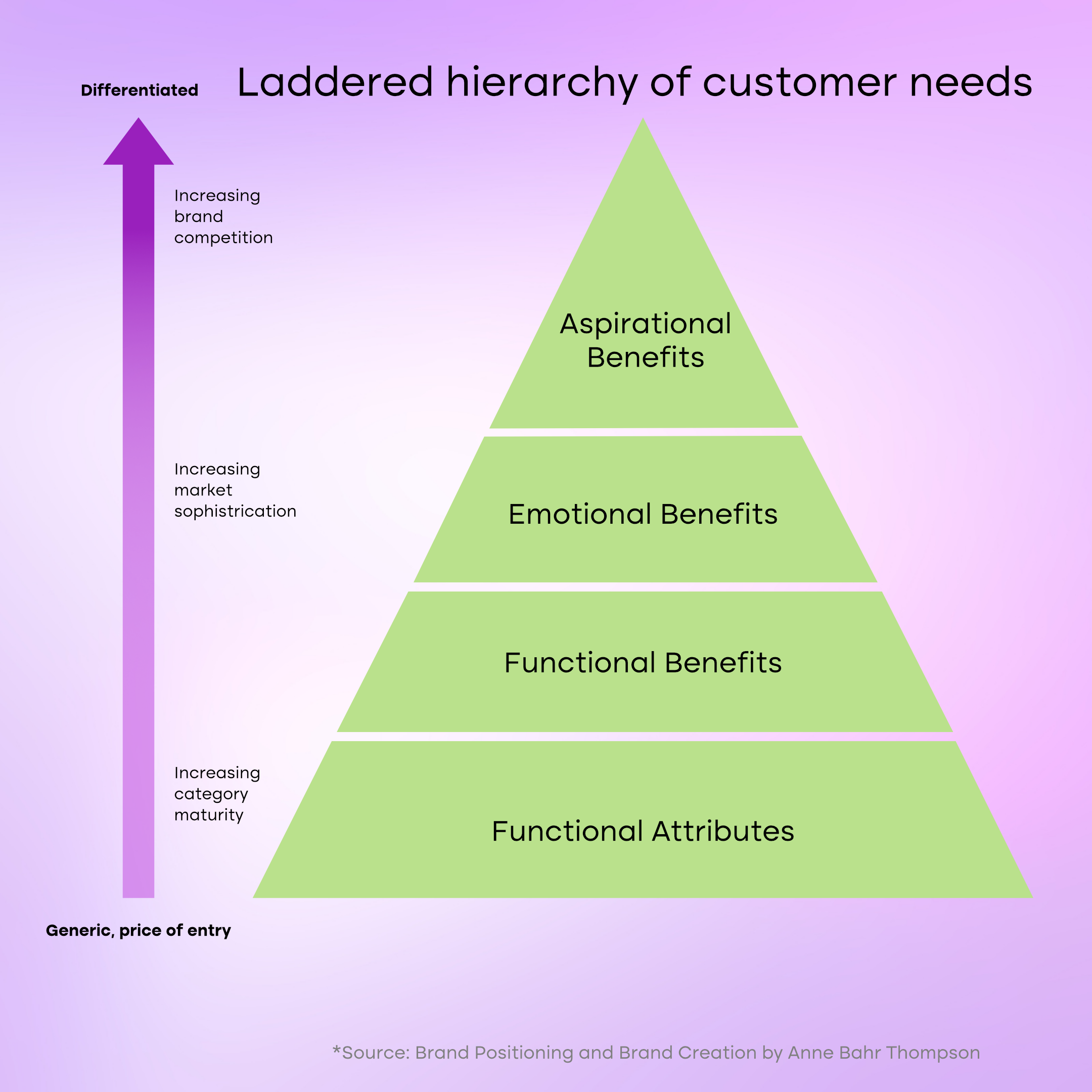
So how can a brand secure its positioning?
By finding out its relative strengths or differences. Mark Ritson, brand consultant and marketing professor, noted that: “Finding something unique is almost impossible, and when you do find it, then it’s replicable in one way or another relatively quickly.” Instead, he proposed a more measured form of “relative differentiation” where the goal is not to be unique, but instead to have “more” of something compared to what other brands do within the category.
By prioritizing “attributes and associations that matter to their target consumers,” they will prove enough to influence purchase decisions. He accepted this was a more “diluted” version of differentiation, but more achievable.
So how do you go about this?
An internal audit that sets the tone for what’s realistically possible for the brand
Consumer insights that tell you whether they’d even care about that relative edge, and their perception of your competitors
And finally, analyzing your advantage by understanding your competitor’s brand strategies
Finding a gap and filling it is overrated. Most brands aren't even doing the basics well enough to defend the ground they're already standing on. Some of them aren’t even agile enough to respond to culture in real time. That’s exactly why every other brand mentioned in the article stole a slice out of Lululemon’s pie.
Does your brand have a relative strength that’s giving you an edge in its positioning?